English▼


Sitio Blog
Línea automática de máquinas de fabricación de producción de celdas cilíndricas
fabricación y equipo de laboratorio de baterías li-ion 18650
Diagrama de flujo de celda de moneda de iones de litio y lista de máquinas
fabricación y equipo de laboratorio de baterías de bolsa de iones de litio
diciembre de 2016 aceptación de la fábrica del cliente de EE. UU. de la máquina apiladora automática
en contacto con nosotros
- Si usted tiene preguntas, póngase en contacto con nosotros, se responderán todas las preguntas
- Correo electrónico : David@tmaxcn.com
- Correo electrónico : Davidtmaxcn@gmail.com
- Añadir : No. 39, Xinchang Road, Xinyang, Haicang Dist., Xiamen, Fujian, China (Mainland)
productos calientes
Blog
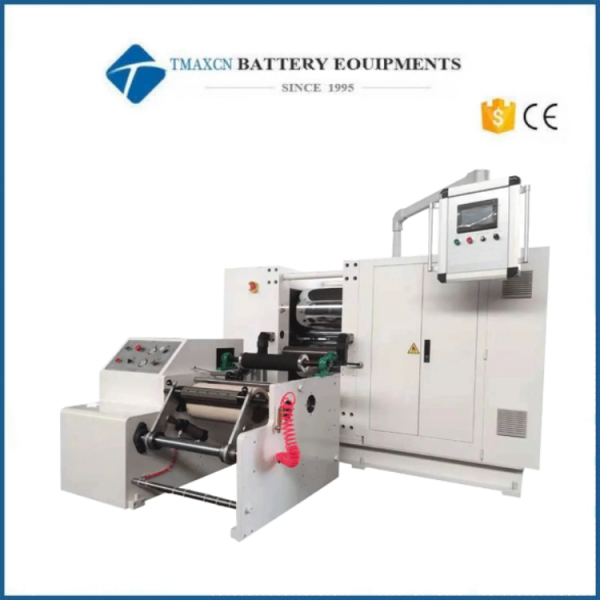
Dry Electrode Film Forming Machine
---
●What is Dry Electrode Technology?
Traditional wet-coating methods for electrode manufacturing involve dissolving active materials in solvents (e.g., NMP - N-Methylpyrrolidone) to create a slurry, which is then coated onto a current collector and dried. In contrast, dry electrode technology eliminates the use of solvents by directly compressing a mixture of active materials and binders into a film.
This approach offers several advantages:
- Reduced environmental impact: No volatile organic compounds (VOCs) are emitted during the process.
- Lower cost: Eliminates the need for expensive solvents and drying processes.
- Improved safety: Reduces the risk of fire or explosion associated with flammable solvents.
- Enhanced performance: Allows for thicker electrodes, leading to higher energy density and longer cycle life.
---
●How Does a Dry Electrode Film Forming Machine Work?
The dry electrode film forming process typically involves the following steps:
1. Material Preparation:
- A dry powder mixture is prepared, consisting of active materials (e.g., lithium iron phosphate, graphite), conductive additives, and binders (e.g., polytetrafluoroethylene - PTFE).
- The proportions of these components are carefully controlled to achieve optimal performance.
2. Extrusion or Calendering:
- The dry powder mixture is fed into the machine and extruded or calendered under high pressure to form a continuous film.
- The machine applies mechanical force to compact the particles into a cohesive structure.
3. Lamination:
- The formed dry electrode film is laminated onto a current collector foil (e.g., aluminum for cathodes or copper for anodes).
- This step ensures good electrical contact between the active material and the current collector.
4. Cutting and Shaping:
- The laminated electrode film is cut into specific shapes and sizes according to the battery design requirements.
5. Quality Control:
- The machine may include sensors and monitoring systems to ensure uniform thickness, density, and adhesion of the electrode film.
---
●Key Components of a Dry Electrode Film Forming Machine
1. Feeding System:
- Responsible for evenly feeding the dry powder mixture into the machine.
2. Extrusion/Calendering Unit:
- Applies pressure to compact the powder into a film.
- May use rollers or dies to control the thickness and density of the film.
3. Lamination Unit:
- Bonds the dry electrode film to the current collector foil.
4. Cutting Mechanism:
- Cuts the laminated film into predefined shapes and sizes.
5. Control System:
- Monitors and adjusts parameters such as pressure, temperature, and speed to ensure consistent quality.
6. Safety Features:
- Includes safeguards to prevent overpressure, overheating, or material blockages.
---
●Advantages of Dry Electrode Film Forming Machines
1. Environmental Benefits:
- Solvent-free process reduces VOC emissions and waste.
2. Cost Efficiency:
- Lower material and energy costs compared to wet-coating methods.
3. Scalability:
- Suitable for large-scale production of high-performance batteries.
4. Flexibility:
- Can be adapted for various types of electrodes (cathodes and anodes) and battery chemistries.
5. Improved Battery Performance:
- Enables the use of thicker electrodes, which can increase energy density and reduce internal resistance.
---
●Challenges and Considerations
1. Uniformity:
- Ensuring consistent density and thickness across the entire electrode film can be challenging.
2. Binding Strength:
- Achieving strong adhesion between the dry electrode film and the current collector requires precise control of binder content and lamination conditions.
3. Equipment Complexity:
- Dry electrode film forming machines are more complex than traditional wet-coating equipment, requiring advanced engineering and calibration.
4. Material Compatibility:
- Not all active materials and binders are suitable for dry processing, so material selection is critical.
---
●Applications
Dry electrode film forming machines are primarily used in the production of:
- Lithium-ion batteries for electric vehicles (EVs), consumer electronics, and renewable energy storage systems.
- Solid-state batteries and other next-generation energy storage technologies.
Companies like Tesla have invested heavily in dry electrode technology, with their "Dry Battery Technology" being a key component of their battery innovation strategy.
---
●Conclusion
Dry electrode film forming machines represent a significant advancement in battery manufacturing technology. By eliminating solvents and simplifying the production process, they offer numerous benefits in terms of cost, performance, and sustainability. As the demand for high-performance batteries continues to grow, this technology is likely to play an increasingly important role in the energy storage industry.
 +86 13174506016
 David@tmaxcn.com