English▼


Sitio Blog
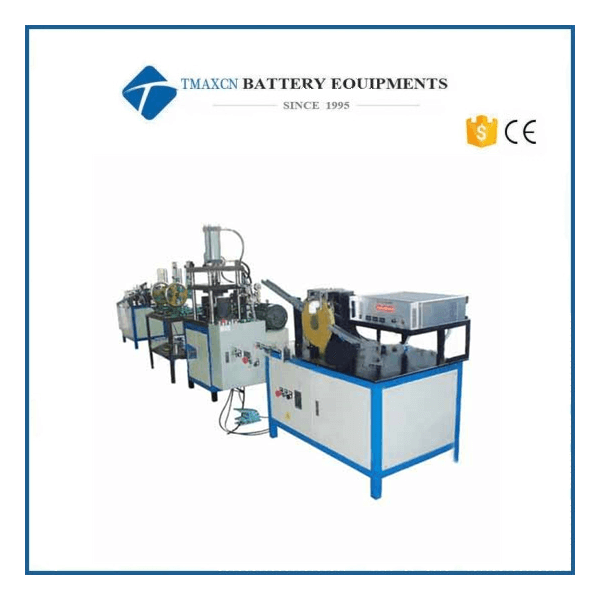
Línea automática de máquinas de fabricación de producción de celdas cilíndricas
fabricación y equipo de laboratorio de baterías li-ion 18650
Diagrama de flujo de celda de moneda de iones de litio y lista de máquinas
fabricación y equipo de laboratorio de baterías de bolsa de iones de litio
diciembre de 2016 aceptación de la fábrica del cliente de EE. UU. de la máquina apiladora automática
en contacto con nosotros
- Si usted tiene preguntas, póngase en contacto con nosotros, se responderán todas las preguntas
- Correo electrónico : David@tmaxcn.com
- Correo electrónico : Davidtmaxcn@gmail.com
- Añadir : No. 39, Xinchang Road, Xinyang, Haicang Dist., Xiamen, Fujian, China (Mainland)
productos calientes
Blog
Supercapacitor Making Line
A supercapacitor making line is an advanced manufacturing setup designed to produce supercapacitors—also known as ultracapacitors. These devices are high-capacity energy storage components that bridge the gap between batteries and traditional capacitors, offering rapid charge-discharge cycles and exceptional longevity. Supercapacitors are used in industries such as automotive, renewable energy, consumer electronics, and industrial equipment.
This article explores the components, processes, and advantages of a supercapacitor production line, emphasizing its role in modern energy storage.
---
● Overview of Supercapacitor Manufacturing
A supercapacitor making line involves the assembly of core components such as:
1. Electrodes: Made from materials like activated carbon, graphene, or carbon nanotubes, offering high surface area for energy storage.
2. Electrolytes: These may be liquid or solid-state, responsible for conducting ions between the electrodes.
3. Separators: Thin insulating materials that prevent direct contact between electrodes while allowing ionic exchange.
4. Encapsulation: Housing the assembled components in robust casings, ensuring durability and reliability.
---
● Key Processes in a Supercapacitor Making Line
1. Electrode Preparation
- Material Coating: Electrodes are coated with active materials, like activated carbon, using techniques such as roll-to-roll coating or spray coating.
- Drying: The coated electrodes are passed through drying systems to remove solvents or binders.
- Cutting and Sizing: After coating, electrodes are cut to precise dimensions for further processing.
2. Assembly
- Stacking or Winding: Depending on the design, electrodes and separators are either stacked or wound into cylindrical or prismatic configurations.
- Insertion: The stacked or wound elements are inserted into casings.
3. Electrolyte Filling
- Electrolyte is injected into the assembled components. The process is often conducted in a vacuum to ensure complete filling and avoid air bubbles.
4. Sealing
- The casing is sealed using laser welding, ultrasonic sealing, or mechanical crimping to ensure durability and leak-proof performance.
5. Formation and Testing
- Charging: The supercapacitor is charged for the first time to activate the electrochemical properties of the electrodes and electrolyte.
- Testing: Parameters such as capacitance, internal resistance, and leakage current are measured to ensure quality compliance.
6. Packaging
- After passing quality control, the supercapacitors are labeled, packed, and prepared for shipment.
---
● Essential Machines in a Supercapacitor Automatic Production Line
1. Electrode Coating Machine
- Applies active material to electrode substrates with high precision.
2. Drying Oven
- Removes solvents from coated electrodes.
3. Winding or Stacking Machine
- Automates the assembly of electrodes and separators into desired configurations.
4. Electrolyte Filling Machine
- Injects electrolytes into assembled units under controlled conditions.
5. Sealing Equipment
- Ensures the durability and safety of the supercapacitor housing.
6. Formation and Testing Station
- Handles the initial charging and performance testing of finished units.
---
● Advantages of a Supercapacitor Making Line
1. High Precision: Advanced automation ensures consistent quality and minimal defects.
2. Scalability: Modular setups can accommodate production scale changes.
3. Customizability: Capable of producing supercapacitors of varying sizes and specifications.
4. Efficiency: Integration of processes reduces material wastage and production time.
5. Reliability: Stringent quality control ensures performance and durability.
---
● Applications of Supercapacitors
- Automotive: For regenerative braking systems, start-stop systems, and EV energy storage.
- Renewable Energy: As storage buffers in wind and solar installations.
- Consumer Electronics: In devices requiring rapid bursts of power.
- Industrial Equipment: For power backup and grid stabilization.
---
● Conclusion
A supercapacitor making line represents a critical infrastructure for manufacturing next-generation energy storage solutions. By combining precision machinery, advanced materials, and automated processes, these production lines enable scalable and efficient fabrication of high-performance supercapacitors. As the demand for sustainable energy storage grows, investment in supercapacitor manufacturing technology will play a vital role in shaping the future of energy systems.
 +86 13174506016
 David@tmaxcn.com